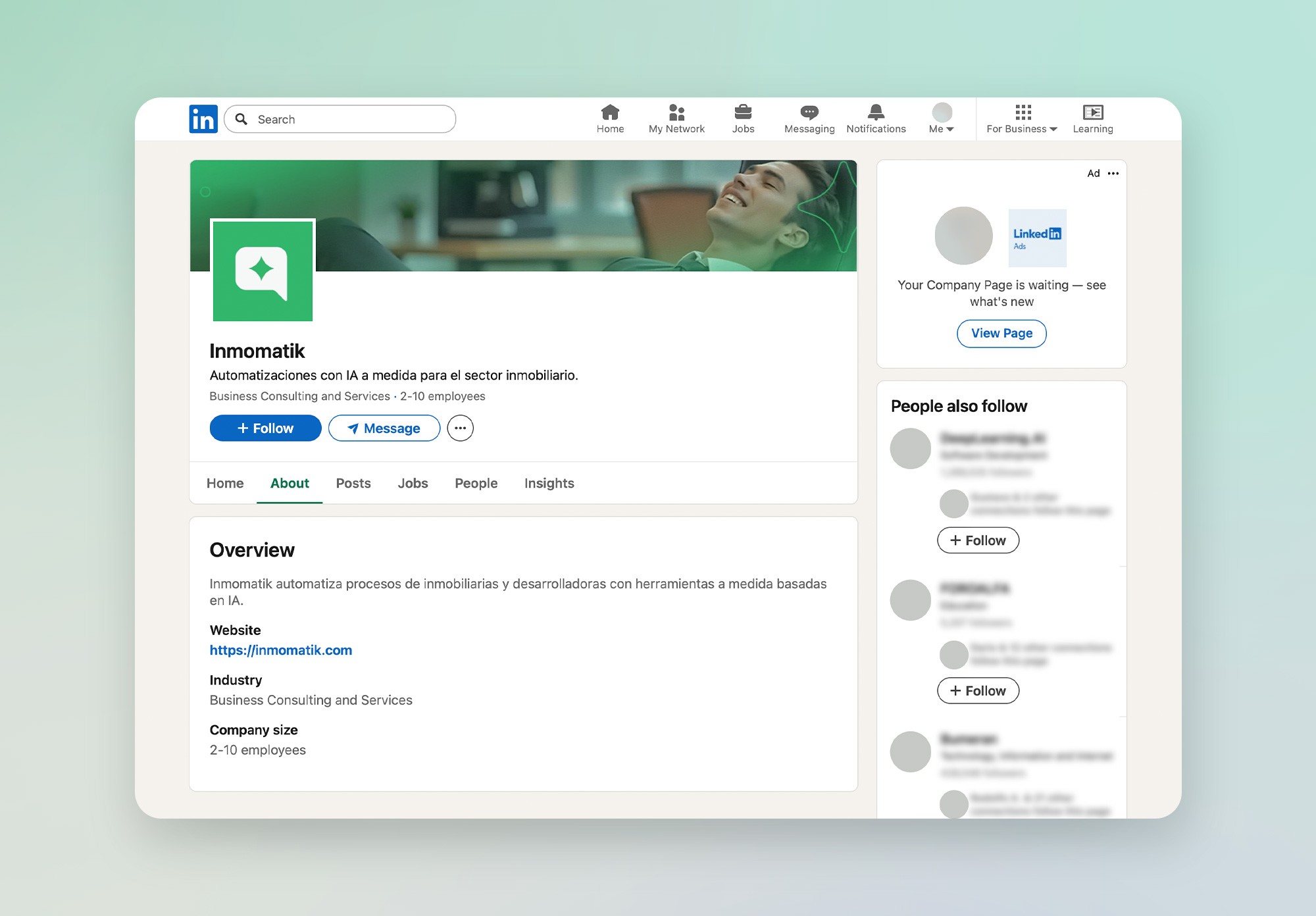
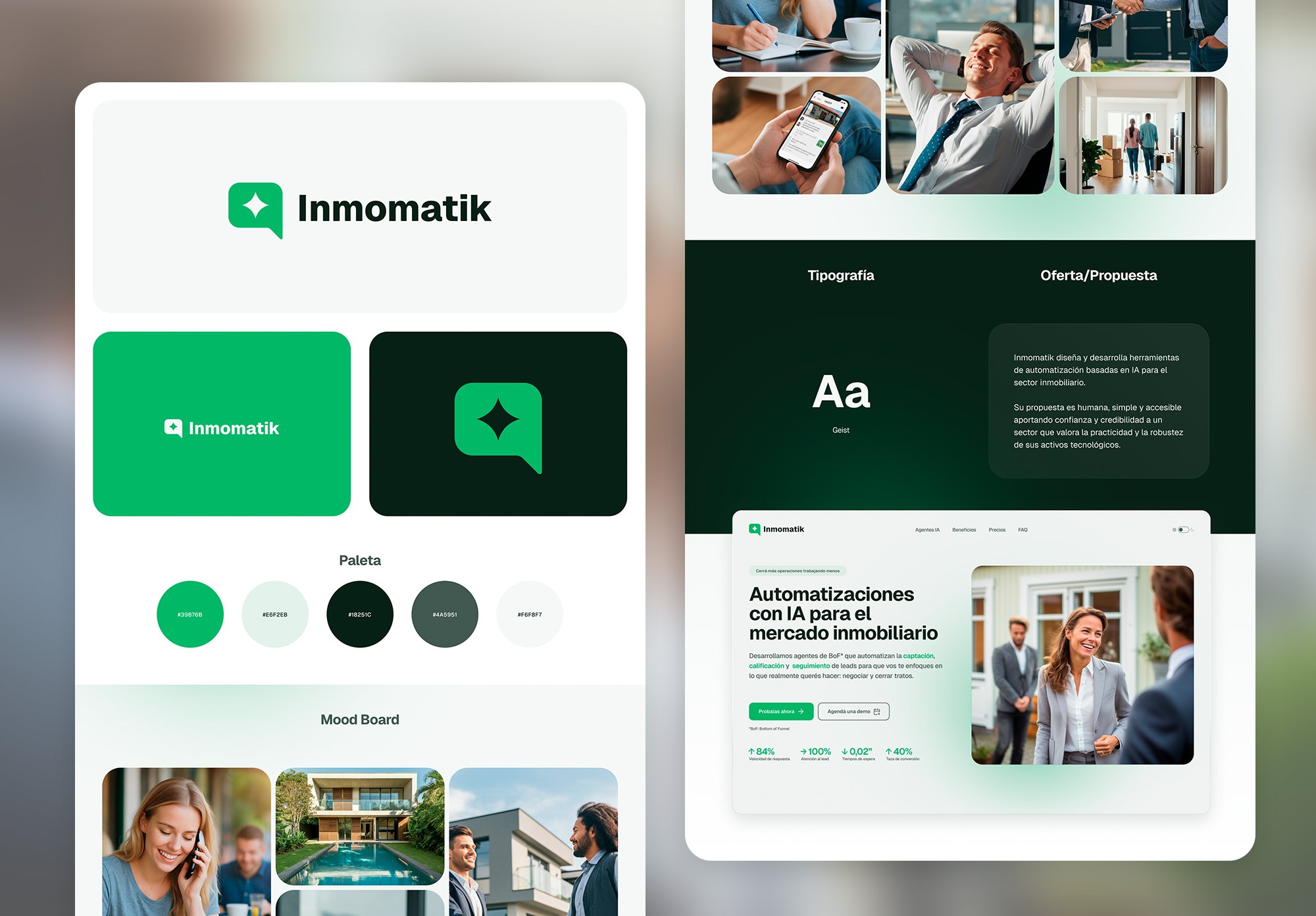
Identity design and no-code development for a B2B AI-driven offering in the Argentine real estate market
Client:
Internal project
Service:
Visual Identity and No-Code Development
Year:
2025

/Project
Inmomatik emerged as a joint initiative between development, marketing, and design to build a Proof of Concept aimed at testing how the Argentine real estate market would respond to a service offering centered on AI-driven process automation.
While similar solutions existed in the local market, Inmomatik sought to add value through deeper customization, better optimization, and a simpler implementation.
This practical advantage also required a distinct symbolic positioning. Existing offerings tended to rely on generic, “off-the-shelf” marketing discourse, leaving room for Inmomatik to express itself through a more genuine, direct narrative focused on solving real problems. The coexistence of a human, realistic proposition with the functional synthesis of AI needed to be translated into a recognizable visual universe with identity and conceptual clarity.


/Problem
The project began in early 2025, during the global expansion of AI and a climate of heightened expectations. However, the initial excitement that fueled a wave of widely promoted “use cases” soon collided with the reality of effective adoption.
Inmomatik launched in August 2025, coinciding with the release of MIT’s report “The GenAI Divide: State of AI in Business 2025,” which compiled data from January to June of that year. The report challenged the dominant narrative, showing that most AI implementations still did not represent meaningful transformation in the processes they aimed to enhance.
These findings, combined with broader financial trends, helped establish the widespread notion of an emerging “AI bubble.” This negatively affected how small and medium-sized businesses perceived the real value of these technologies.
As a B2B AI-based offering, Inmomatik was impacted by this growing skepticism, which slowed the willingness of the real estate and property development sectors to invest in new technological initiatives.

/Conclusions
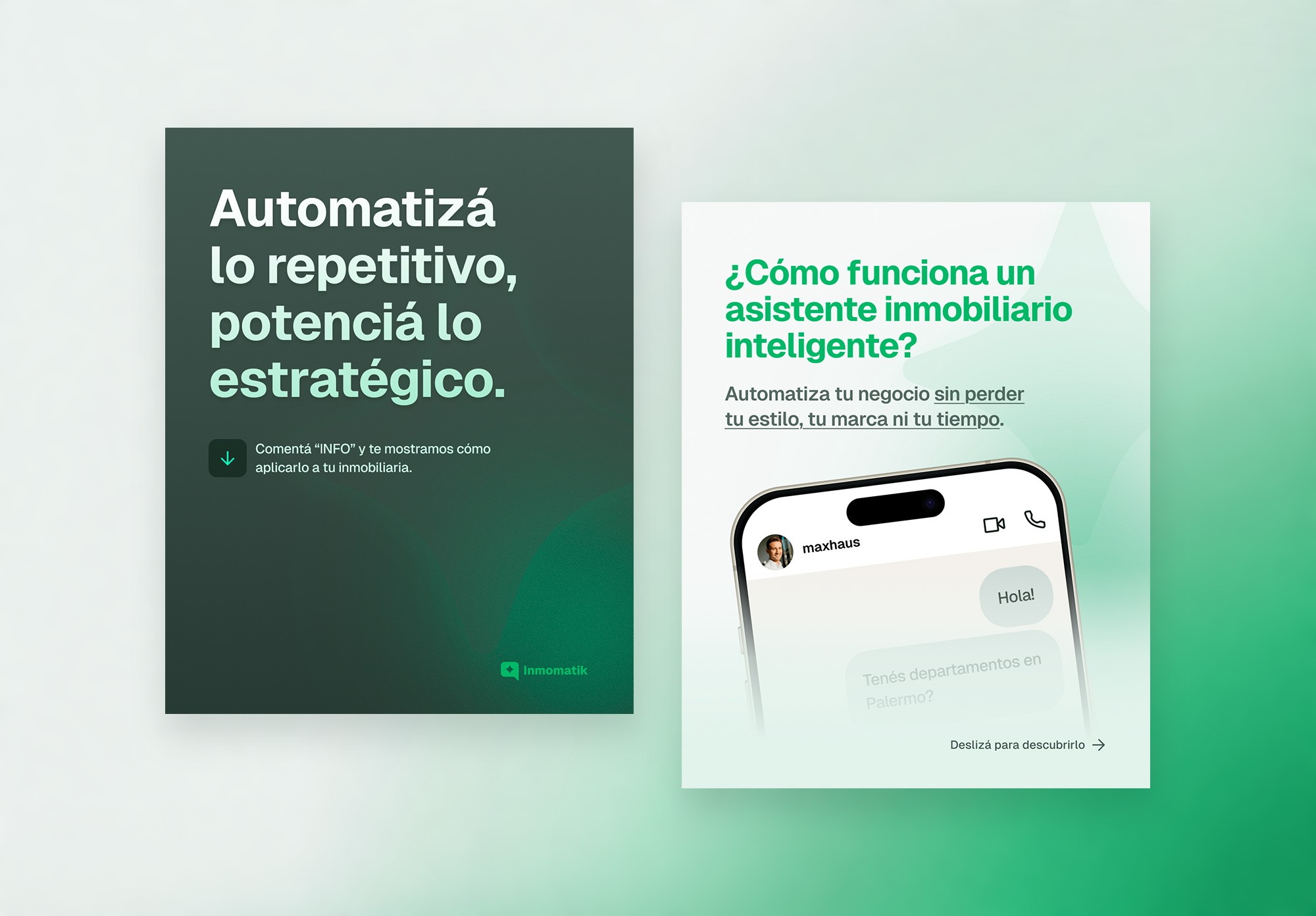
Although the project is currently on hold, awaiting a more favorable context, it is notable that its social media channels experienced slow yet steady organic growth — despite minimal content output and no significant campaigns. This behavior suggests that the project’s symbolic positioning succeeded in conveying solidity and technical-commercial potential, even within an environment of widespread skepticism.